Stitch by stitch: The psychology of knitting
Sometimes, to rest our minds, we don't need to do nothing — we need to make something small with our hands.

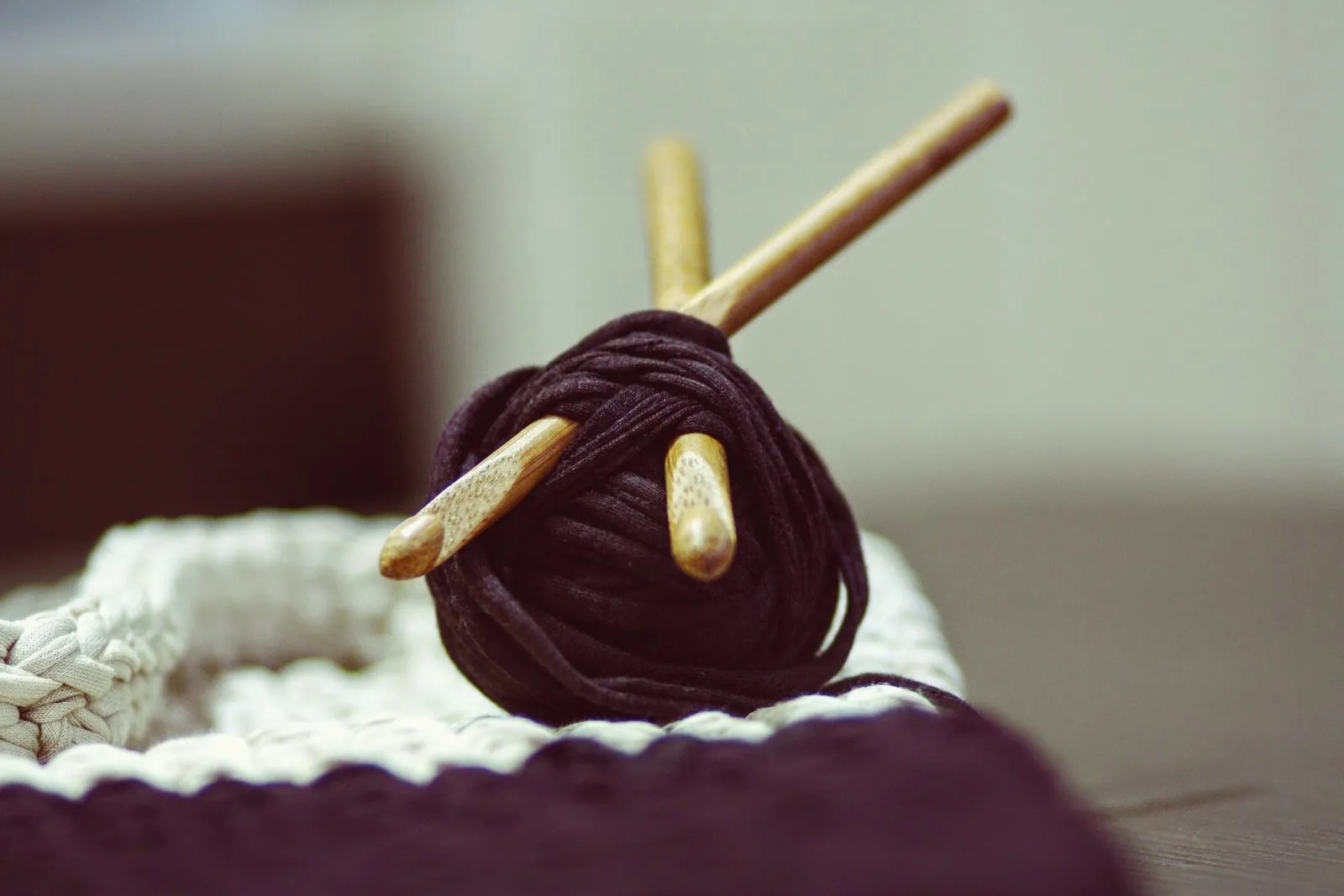
Are there moments in your day when your mind simply won't go quiet? Replaying a conversation from the past, worrying about things that haven't happened yet, running through your to-do list again and again… In modern life, our minds are often busy with many things at once. So could two needles, a ball of yarn and a few repeated movements make a difference to how we relate to that mental noise?
At first glance, knitting may look like nothing more than a hobby. Yet this simple activity intersects with psychologically meaningful processes such as attention, creativity, a sense of accomplishment and social connection. And this relationship has been the subject not only of personal experience, but of scientific research as well.
When the mind is busy with stitches: Attention and a mental break#
When we knit, we direct our attention to a specific task: following the yarn, counting stitches, repeating movements in sequence and watching the pattern emerge. This process can help gather our attention in one place.
Knitting movements that have become familiar enough, in particular, can keep us focused on the activity while drawing us away from other thoughts for a while. This can create an opportunity to take a break from the thoughts that occupy us in daily life.
This is where the concept of flow comes in. Developed by psychologist Mihaly Csikszentmihalyi, it describes the experience of being deeply absorbed in an activity, noticing less how time passes, and enjoying the action itself.
Of course, not every knitting session means being in flow. Struggling with a very difficult pattern can be frustrating; an overly easy piece can feel boring. But a knitting activity that matches one's skill and requires some attention can make room for this experience.
What matters is not emptying the mind completely, but finding an activity to which we can redirect our attention.
The calming effect of repetitive movement#
Knitting has a rhythm of its own. The motion of the needles, the yarn passing between our fingers, one stitch forming after another… For some people, these repetitive movements can become a calming experience.
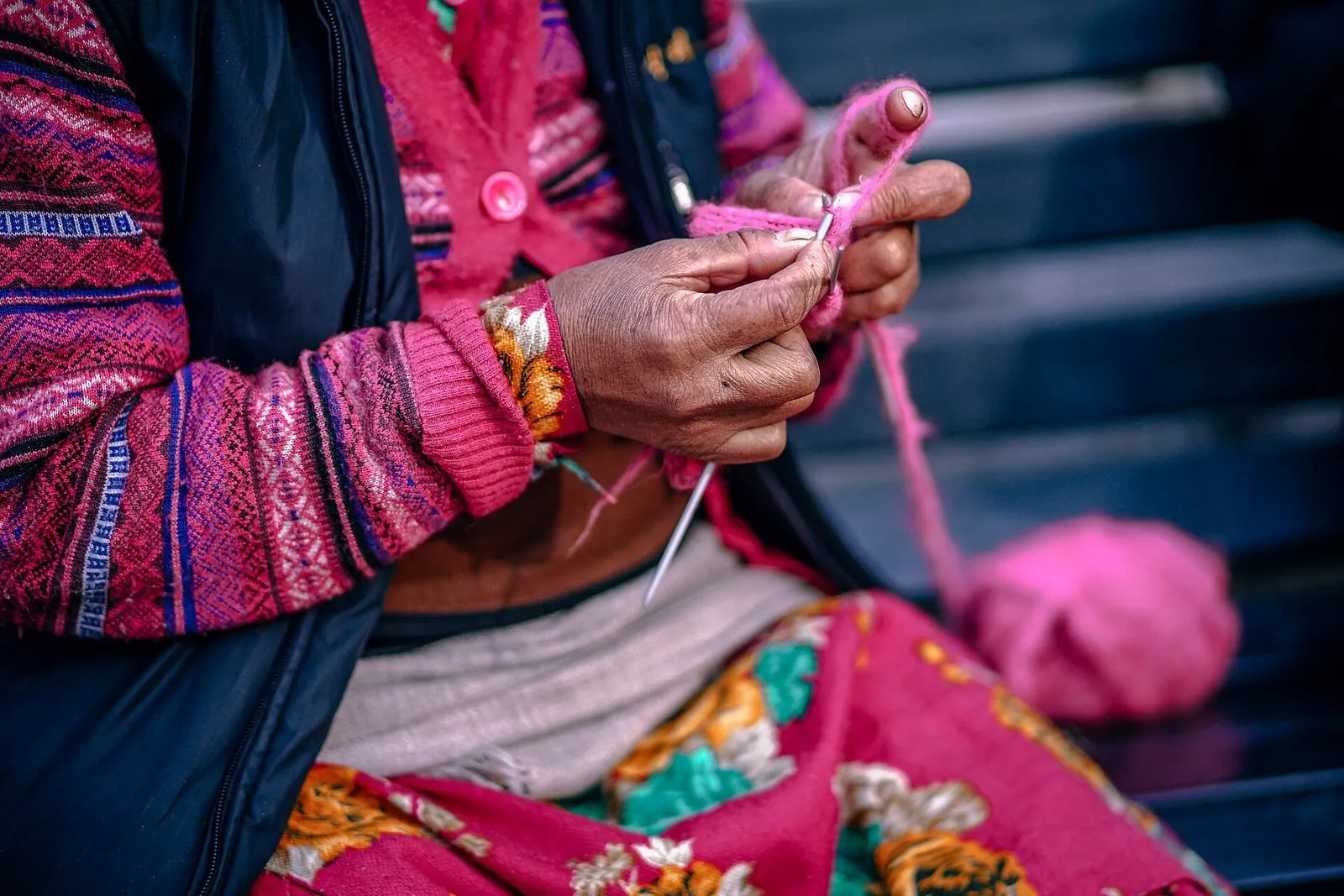
A study by Riley, Corkhill and Morris, published in 2013, examined responses from 3,545 knitters around the world. It found meaningful associations between how often people knitted and how calm and happy they felt. Knitting in a group was associated with perceived happiness, social contact and communication.
These findings are interesting, but one important detail should not be forgotten: the study was an online survey. It therefore does not prove that knitting on its own causes happiness, or that it has the same effect on everyone.
Still, the findings offer valuable clues as to why knitting may be meaningful as a relaxing activity in everyday life.
Sometimes resting is not about doing nothing; it is about being soothed by the rhythm of what we do.
Why can making something feel good?#
When you start knitting, there is only a ball of yarn and a few stitches. Over time, these small pieces turn into a scarf, a sweater or something else made with your own hands.
There is something psychologically meaningful in this transformation: the process holds both effort and a visible result.
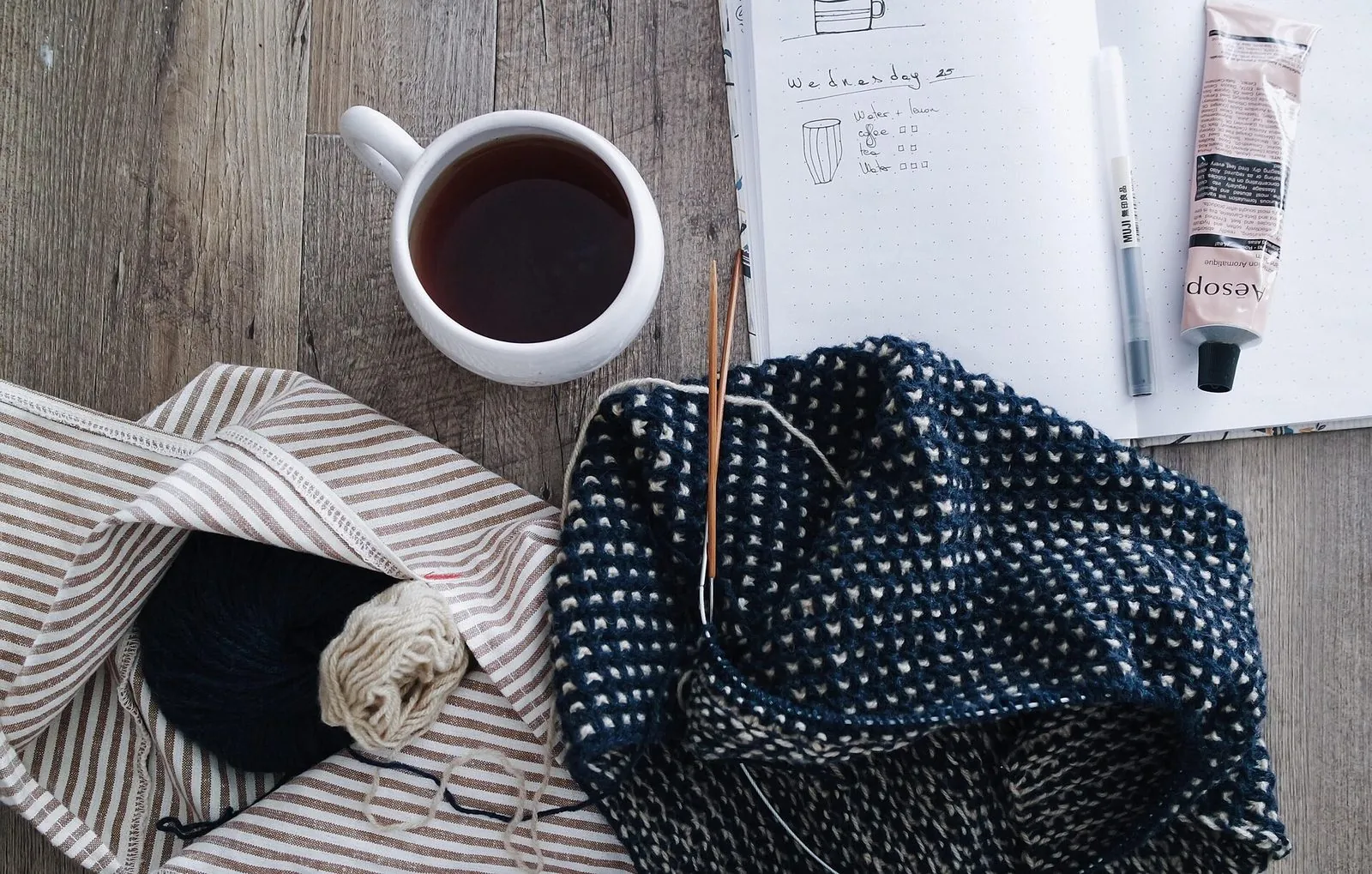
Finishing a piece lets us see the fruits of our effort in concrete form. Learning a new technique, managing a pattern that once felt too hard, or finishing a small piece can support a sense of competence and accomplishment.
A 2024 study by Keyes and colleagues, published in Frontiers in Public Health, analysed data from 7,182 adults living in England. Taking part in artistic creation and craft activities was reported to be positively associated with life satisfaction, happiness and a sense that life is worthwhile.
Here too, it is worth noting that association does not mean causation. The study does not show that everyone who does crafts will be happier. But it offers meaningful evidence that the process of making may be linked to wellbeing.
What's more, the result in knitting does not always have to be perfect. Fixing a dropped stitch, redoing a row that went wrong, and eventually carrying on are also part of the process.
Perhaps the real point here is not only the finished object, but experiencing that we can learn something, correct our mistakes and move forward through our own effort.
More than a ball of yarn: The power of making together#
Knitting is often thought of as a solitary pursuit. Yet knitting together can create a space for sharing that is different from simply being in the same room.
While focusing on their own work, people can learn techniques from one another, share experiences and chat about everyday life. And they don't always have to talk. Making things side by side in silence can also be part of a social experience.
In the study by Riley and colleagues, knitting in a group was associated with participants' perceived happiness and social connection. A 2024 scoping review of needlecraft also highlighted themes such as social connection, belonging, purpose and personal meaning.
From this perspective, knitting workshops can offer more than a new skill: they can be places where people come together around a shared activity.
In such a setting, no one needs to move at the same pace, make the same thing or talk about their personal life. The time spent together can be meaningful enough in itself.
Because sometimes, feeling part of a community comes not from big conversations, but from sharing a small, common pursuit.
Is knitting a form of therapy?#
When we talk about knitting and psychological wellbeing, this question needs to be asked.
A 2025 systematic review on crafts and mental health evaluated 19 studies of craft-based interventions. The studies reported short-term improvements in a range of outcomes such as anxiety, stress, mood, self-efficacy and life satisfaction.
However, the methods and quality of these studies vary. Data on whether the effects last over the long term are also limited. There is therefore not enough evidence to say that craft activities treat specific psychological problems.
Knitting does not replace psychotherapy. Nor can it be said to have the same effect for everyone living with depression, anxiety disorders or other mental health difficulties.
That said, knitting can become part of a person's life as an activity they enjoy, feel productive in and use to make time for themselves. For some it may be relaxing, for others creative, for others social.
And knitting doesn't have to be relaxing for everyone. Repetitive hand movements can cause physical discomfort; making mistakes or trying to finish something on time can be stressful. That's why it matters to go at a pace that suits your own needs, physical comfort and experience.
How can we make room for ourselves while knitting?#
To benefit from knitting's possible psychological contributions, there's no need to turn it into another arena for performance. On the contrary, a few small reminders can make the experience more enjoyable:
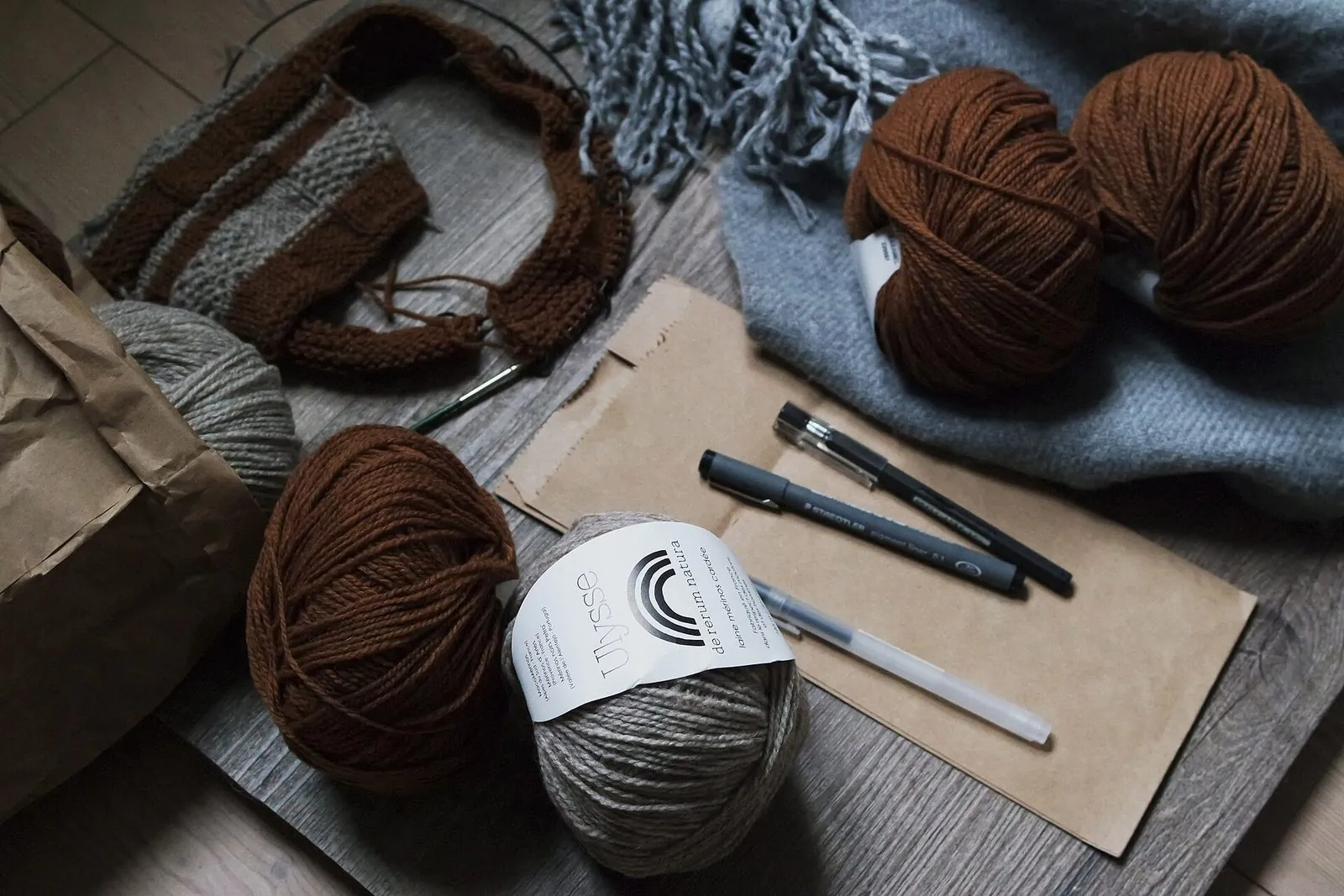
- Focus on the process, not only the result. You don't have to finish something every session.
- Choose a challenge that suits you. Start with a pattern that is neither completely boring nor constantly frustrating.
- Allow yourself to make mistakes. Dropping or unravelling stitches is an ordinary part of learning.
- Find your own rhythm. You don't have to keep up with anyone else's pace.
- Share if you'd like to. Joining a knitting group, sharing what you've learned, or simply making things on your own are all options.
None of these are strict rules. What matters is experiencing knitting not as another task added to your to-do list, but as something that does you good.
In closing: A small pause in every stitch#
Knitting does not solve all of life's problems. It does not make the thoughts in our minds disappear at once, nor does it always make us feel calm.
But it can offer a smaller, more concrete experience: an activity to direct our attention to, an object shaped by our own effort, a chance to learn, and a shared space we can enjoy with others.
Perhaps the most psychologically meaningful thing about knitting is that, in a world where we are always trying to be faster, produce more and keep up with everything, it offers us a different rhythm. One stitch, then another… Sometimes moving forward is not about speeding up; it is about being able to pay attention again to what we are doing.
So, how do you feel when you knit? For you, is knitting a way of making, a mental break, a creative pursuit, or a way to connect with others?
References#
- Riley, J., Corkhill, B., & Morris, C. (2013). The benefits of knitting for personal and social wellbeing in adulthood: Findings from an international survey. British Journal of Occupational Therapy, 76(2), 50–57. https://doi.org/10.4276/030802213X13603244419077
- Keyes, H., Gradidge, S., Forwood, S. E., et al. (2024). Creating arts and crafting positively predicts subjective wellbeing. Frontiers in Public Health, 12, 1417997. https://doi.org/10.3389/fpubh.2024.1417997
- Bukhave, E. B., Creek, J., Linstad, A. K., & Frandsen, T. F. (2025). The effects of crafts-based interventions on mental health and well-being: A systematic review. Australian Occupational Therapy Journal, 72(1), e70001. https://doi.org/10.1111/1440-1630.70001
- Le Lagadec, D., Kornhaber, R., Johnston-Devin, C., & Cleary, M. (2024). Healing stitches: A scoping review on the impact of needlecraft on mental health and well-being. Issues in Mental Health Nursing, 45(10), 1097–1110. https://doi.org/10.1080/01612840.2024.2364228
This piece is for general information; it does not diagnose and does not replace an individual psychological support process.
Share this piece
Vertical image, ready for WhatsApp status and Instagram stories.